

AI Contract Analysis: NDA Review
Review NDAs faster with AI-powered
contract analysis
What is AI NDA review?
AI NDA review uses artificial intelligence to analyze non-disclosure agreements and extract important contract provisions for legal review. Instead of manually reviewing every NDA from beginning to end, legal teams can automatically identify and review clauses related to confidential information definitions, permitted use restrictions, survival periods, residuals clauses, non-solicitation language, governing law, assignment rights, return or destruction obligations, disclosure exceptions, limitation of liability, and data protection obligations. The software organizes this information into structured outputs that help legal teams review agreements more quickly and consistently.
AI NDA review is often part of a broader contract analysis software workflow where teams analyze, compare, search, and report on contracts at scale.
Why legal teams use AI for NDA review?
NDAs are repetitive by nature, but they still require careful legal review. Many organizations process large volumes of confidentiality agreements every week, making manual review difficult to scale.
AI NDA review software helps legal teams solve common operational and legal review challenges.
Slow turnaround times
Business stakeholders expect NDAs to move quickly. Delays in review can slow procurement, partnerships, sales, hiring, and onboarding processes.
High NDA volume
Legal teams often review NDAs from customers, vendors, procurement teams, recruiting teams, consultants, and external partners. Manual review creates bottlenecks that slow business workflows.
Limited visibility across NDA portfolios
Organizations often lack a structured view of obligations and risks across their NDA inventory. AI contract analysis helps convert NDA collections into searchable, reportable datasets.
Difficulty identifying non-standard language
Many NDAs appear similar at first glance, but important differences may exist in confidentiality obligations, residuals language, survival periods, assignment rights, or disclosure permissions.
Inconsistent review standards
Different reviewers may focus on different risk areas. AI-assisted review helps standardize NDA review workflows across teams.

-
Commercial legal teams often process large numbers of inbound NDAs from customers. AI review helps accelerate turnaround times while identifying non-standard provisions that require escalation.
-
Procurement teams frequently exchange NDAs during vendor evaluations and onboarding. AI contract review helps legal teams process these agreements more efficiently.
-
M&A transactions often involve confidentiality agreements between buyers, sellers, advisors, and external parties. AI NDA review helps teams analyze obligations quickly during deal activity.
-
Organizations may need to analyze their NDA inventory to identify confidentiality obligations, governing law exposure, or outdated agreements.
-
Legal and compliance teams may need to identify NDAs containing specific language related to cybersecurity, privacy, or regulatory obligations.
Common use cases for AI NDA review
AI NDA review
vs
manual NDA review
Manual NDA review can work for a small number of agreements, but it becomes difficult to scale when legal teams face increasing contract volume and pressure for faster turnaround times.
AI NDA review software helps legal teams:
Review NDAs faster
Standardize outputs
Identify non-standard language
Search across NDA portfolios
Reduce repetitive clause review
Improve visibility into obligations
Export structured summaries and reports
AI does not replace legal judgment. Instead, it helps legal teams identify relevant language faster and focus attention on the agreements that require deeper legal analysis.
-
The platform should identify confidentiality-specific provisions commonly reviewed in NDAs.
-
Users should be able to validate extracted language directly against the original agreement.
-
The software should support comparison against preferred language, templates, or fallback positions.
-
The platform should support large NDA datasets efficiently.
-
Review status tracking, assignments, and QA workflows help support operational legal review.
-
Because NDAs contain sensitive business information, enterprise-grade security and access controls are essential.
What to look for in NDA review software?
How eBrevia supports
AI NDA review?
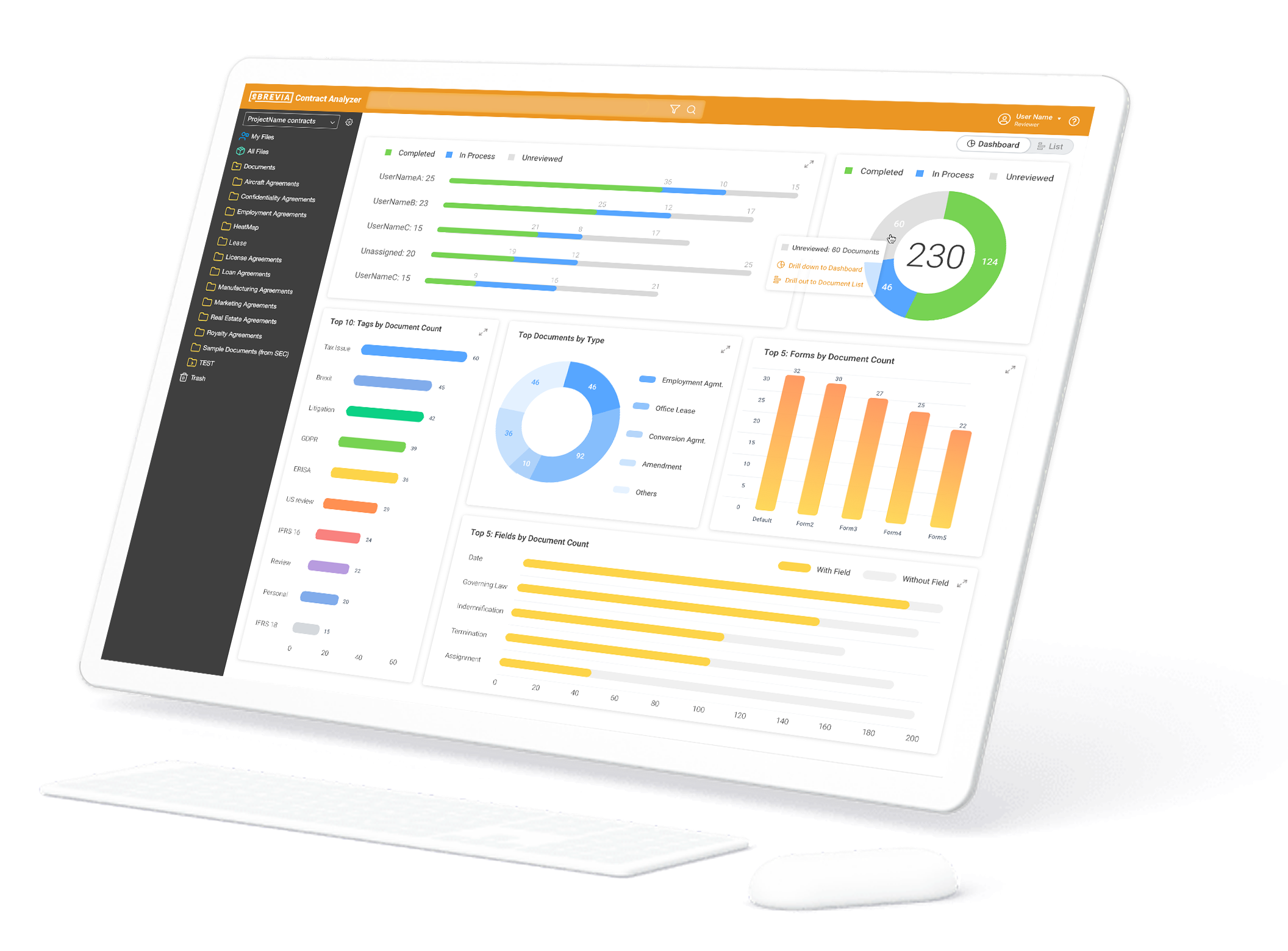
eBrevia Contract Analyzer helps legal teams review NDAs faster while maintaining visibility into source language and legal risk areas.
Extract NDA clauses automatically
Identify deviations from preferred language
Compare NDAs against templates and standards
Review extracted clauses alongside the original contract
Search and filter agreements by clause content
Group similar NDAs together to reduce repetitive review
Export structured summaries and reports
Ask natural language questions across NDA collections using AI
-
AI NDA review software uses artificial intelligence to analyze non-disclosure agreements, extract key clauses, identify risks, and organize results into structured outputs for legal review.
-
AI can extract provisions such as confidentiality definitions, survival periods, residuals clauses, governing law, assignment rights, non-solicitation language, and disclosure obligations.
-
Yes. eBrevia helps legal teams compare NDA clauses against templates, standards, or fallback positions to identify deviations that may require review.
-
Yes. Users can review extracted NDA clauses alongside the original contract and jump directly to the relevant text in the source document.
-
Yes. eBrevia supports bulk NDA analysis, filtering, searching, clustering, and reporting across large contract sets.
-
Yes. AI NDA review is commonly used by commercial legal teams to accelerate inbound NDA review workflows and reduce turnaround times.
-
Yes. Procurement and vendor onboarding teams can use eBrevia to streamline NDA review and identify non-standard provisions quickly.
-
No. AI helps legal teams identify and organize relevant contract language faster, but legal professionals still make the final review and business decisions.
-
Yes. eBrevia supports structured exports and reporting for downstream workflows, audits, and portfolio analysis.